For leaders of mid-sized businesses
Make AI work for your people. Prove what it does for your business.
We help you choose the AI work worth doing, put clear boundaries around it so people can get on with it, and build the capability to keep it going.
It usually starts somewhere like this.
01 / Where it starts
Plenty of AI activity. Not much the business can point to.
Most leaders we talk to recognise at least one of these.
-
People are trying things, but the work is not changing.
Individuals use AI tools on their own. Some of it helps. Little of it adds up to better work across the business.
-
Nobody is quite sure what is allowed.
Some people hold back. Others press on without asking. Either way, leaders cannot see what is in use or what it risks.
-
The capability sits with one or two people.
A few people get real value. When they are busy or they leave, the know-how goes with them.
-
It is hard to tell what is worth doing.
There are new options every month and no clear way to choose between them, so decisions stall.
Most of that is not a technology problem. It is a question of where to start and who gets to act.
02 / What changes
Start with work that matters. Build the confidence to do more.
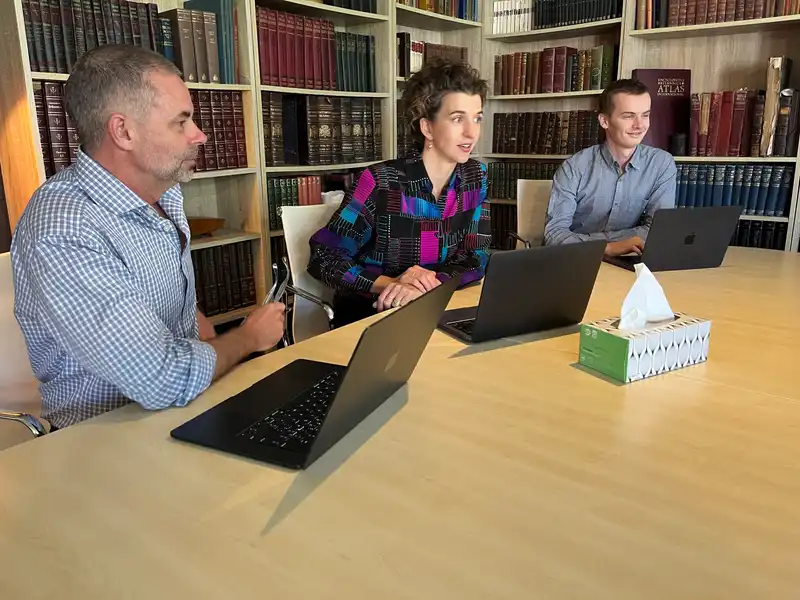
We start with a few pieces of work that make a real difference to your business. We set clear boundaries around them, so people know what they can do and leaders can see what is happening.
Your people learn by doing the work with us, not by sitting through theory. You can see what it changed. That gives you the confidence and the momentum to take on the next piece.
- Better work today
- Capability the business keeps
Here is how that plays out with your people, one step at a time.
03 / How we help
Four steps, done with your people
Every engagement follows the same shape. How long each step takes depends on your business.
Step 1 · Plan
Choose the work worth doing
We agree with your leaders where AI can make a real difference and what good looks like.
Choosing the work is the easy part. People still need to know what they are allowed to do.
04 / Room to act · Step 2, Govern
Give people room to act. Give leaders confidence to let them.
Good governance is not a policy that sits in a drawer. It is a short set of boundaries, decisions and checks that people can use every day. People know what they can do. Leaders can see what is happening and step in when something changes. That is what lets useful work go ahead.
We design and build governance that fits your business: the boundaries, registers and approvals, set up so your team can run them day to day.
How our governance work runs-
Clear boundaries
What AI tools can be used for, and what they never touch.
-
Named decisions
Who approves what, and when a change needs a fresh decision.
-
Visible activity
Leaders can see what is in use and what it is doing.
-
People stay responsible
Every decision keeps a person accountable for it.
With clear boundaries in place, the work can start.
05 / Doing the work
Do the work together. Keep it working.
Step 3 · Execute
Do the work together
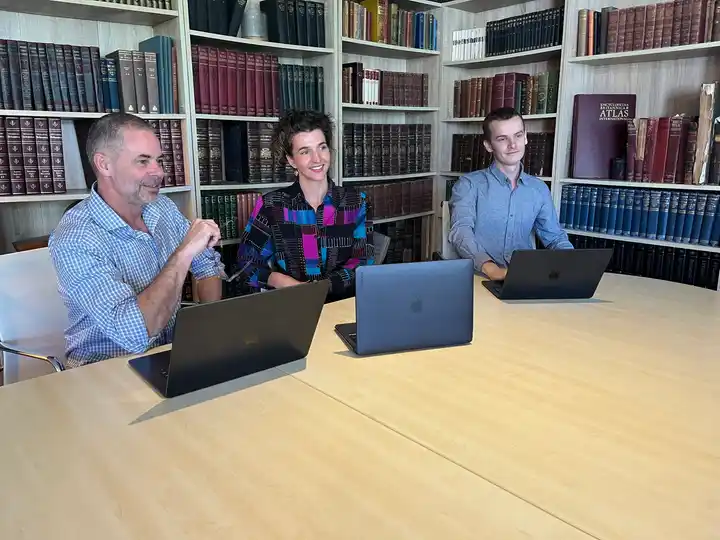
We build and use it alongside your team, inside their real work, so the skills stay with them.
Step 4 · Sustain
Keep it working
Ownership, upkeep and evidence, so the business can carry it on and improve it without us.
None of this is done from a distance. These are the people who do it with you.
06 / Who you work with
Experienced business people who also build the systems
We have run, grown and advised businesses for decades. We also build the technology ourselves. That is how we connect what your business needs with what AI can actually do.
-
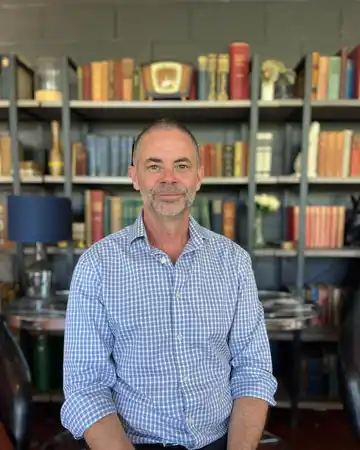
Mark Lucas
Managing Partner
Mark has founded and scaled businesses from start-up to NZX listing and has spent more than 25 years building teams that deliver. He helps leaders put AI to practical, commercial use.
-

John Marshall
Partner
John has advised mid-sized New Zealand businesses for more than 20 years. He chairs advisory boards across finance, technology, manufacturing and healthcare, with deep experience in governance and growth.
-

Belinda Woolrych
Consulting Partner
Belinda has more than 20 years of experience building capability and leading change in large organisations. She led organisational development and learning at SkyCity Entertainment Group and was Education Director at the Real Estate Institute of New Zealand. Her focus now is the people capability behind AI adoption.
-

Caleb Lucas
Head of Digital
Caleb leads our technical work. He designs and builds the systems, integrations and agent workflows behind our client work and our own operation.
At the end of each piece of work, we ask what it changed.
07 / What it changed
Three questions we answer for every engagement
-
Did the work improve?
Quality, progress, capacity, rework and the business results that matter to you.
-
Can others carry it on?
Usable knowledge, proper handover and people working confidently within the boundaries.
-
Can the business sustain it?
Clear ownership, sensible upkeep and sound decisions as circumstances change.
Placeholder: a real client example. One short story of a piece of work and what it changed, with the client’s approval to describe it publicly.
Our clients
Businesses we are working with








Logos shown for review only. Each client to agree before public use.
In their words

“We're making some great time savings so far. It's essentially supercharging the team. There is so much information and competing possibilities with AI, but GenerationAI gave us the tools to get started.”
“I'm walking away absolutely buzzing about what AI can do for business leaders. Getting that governance in place right up front was a huge eye-opener. The alternative is you could lose a lot of your IP when that person walks out the door if you don't have those controls in place.”

“I learned how to streamline processes and improve efficiency. It's given me confidence to integrate AI into daily tasks and make smarter use of technology in business.”
“I've truly unlocked wider thinking and understanding of AI, which makes me more efficient and strategic in all aspects of my business. We are unlocking huge operational gains and insights by rolling out AI strategically. Get involved or you'll be left behind!”
If that leadership team sounds familiar, the next step is a conversation.
08 / Talk to us
Start with a conversation
Tell us where AI sits in your business today. We will tell you plainly what we would do first and what it would take.
Talk to us